
➤
Back to News
22 June 2026
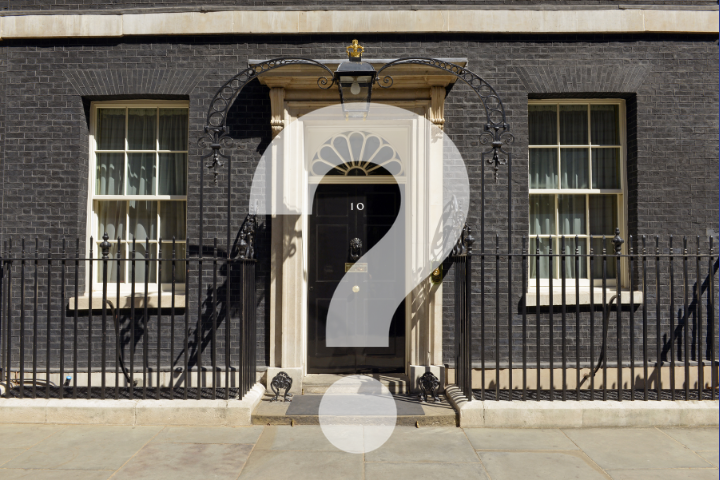
A Message to the Incoming Prime Minister: Bring Rural Homelessness in from the Cold
Political change brings opportunity. We're asking the incoming leader of our country to use it — and to bring rural homelessness in from the cold.
When a Prime Minister leaves office, the country pauses. Whatever your politics, a change of leadership is a moment of possibility — a chance to reset priorities, to look at what has been left undone, and to decide what kind of country we want to be.
We think there is one issue that has been left in the shadows for too long. Not because it is hard to understand, and not because the solutions are unknown. It has been left there simply because the people affected are easy to ignore.
We are talking about rural homelessness. And we are asking the incoming Prime Minister to make ending it a genuine priority — not a footnote, not a line in a consultation, but a commitment with real resource behind it.
Here in Wisbech, Cambridgeshire, Ferry Project supports around 80% of all homeless people in the Fenland area. That is not a statistic we share with pride. It reflects how vast the need is — and how little has been put in place to meet it.
In 25 years of operation, we have supported over 3,500 people and provided more than 450,000 nights of accommodation. We have walked alongside people fleeing domestic violence, leaving the care system, living with severe mental illness, released from prison with nowhere to go. We have seen what works. We have also seen, year after year, what happens when the right support is not there.
Rural homelessness is largely invisible — and that invisibility is not accidental. There are no tent cities along the high street. No soup queues stretching around the corner of a city centre. People in crisis in places like Fenland are hidden in farmworkers' accommodation that has long since become uninhabitable, sofa-surfing across isolated villages where public transport barely exists, or sleeping rough in places no one thinks to look. When homelessness does not look like the image most people carry in their heads, it does not make the news. And when it does not make the news, it does not make the policy agenda.
The consequences are serious and measurable. Rural areas receive significantly less funding per homeless person than urban ones. Services are spread across large geographies, meaning that someone in crisis may be many miles from any support. Mental health and social isolation are deeply intertwined — the very isolation that makes rural life beautiful for some makes survival harder for those without a home, a network, or a way out.
We know what works because we have spent 25 years learning it.
It is not complicated, but it is not cheap either. It starts with somewhere safe to be — real accommodation, not just a bed for the night. It continues with trusted relationships. The keyworker who shows up every time. The support worker who knows your name, your history, your strengths, and your fears. Trauma-informed care that treats people as whole human beings rather than as problems to be processed.
From there: life skills, because many of the people we support have never learned how to run a household, manage a budget, or cook a meal. Employment support, because work is not just income — it is identity and structure and belonging. Health services, because homelessness and poor health are inseparable, and because in rural areas, a GP appointment can feel like an impossible luxury.
What we are describing is a full continuum — from the night someone arrives at our door to the day they hold the keys to their own home. Last year, 83% of the people who left our services did so with a positive outcome: a new tenancy, a reconnection with family, a move to independent living. Twelve people gained paid employment. Forty-one accessed health services they had not been able to reach before.
These outcomes are achievable. They require sustained, properly resourced support. And they require a government that believes rural communities deserve the same attention as urban ones.
This is not a party political argument. The underfunding of rural homelessness has persisted across governments of all colours. It is a structural problem rooted in the way homelessness is measured, counted, and funded — systems that were largely designed around the visible, concentrated homelessness of cities, and that have never fully adapted to the reality of a dispersed, hidden, rural population.
The incoming Prime Minister has an opportunity to change that. Not by inventing something new — but by listening to the organisations that have spent decades doing this work in communities that national policy rarely reaches.
We are ready to be part of that conversation. We know what works. We know what the people we support need. And we know that the cost of not acting — the human cost, and the long-term financial cost of crisis intervention, emergency healthcare, and repeated cycles of homelessness — is far higher than the cost of getting it right.
If you believe that every person deserves a path home — wherever in the country they are — we ask you to use your voice. Share this piece with someone who shapes policy. Write to your MP. Ask your local council what provision exists for rural homelessness in your area, and what happens to those who fall through the gaps.
And if your organisation works in housing, health, or social care and you want to understand what a full-continuum approach to rural homelessness looks like in practice, we would welcome the conversation.
The people we support cannot wait for the next political cycle. They are here now, in our communities, in need of help that only consistent, properly funded support can provide.
This is the moment. We hope the next Prime Minister will take it.
Ferry Project has been supporting homeless and vulnerable people in the Fenland area since 1999. To find out more about our work, or to get in touch, visit ferryproject.org.uk .



£20
£50
£100
£50 allows us to support someone who is street homeless by giving them a room for a night, support and advice, a shower, wash their clothes and have a meal.