
➤
Back to News
15 November 2026
Hidden Homelessness in Rural England: What a Cornish Shed-Dweller Reveals About Home
If you think homelessness always looks like rough sleeping, this conversation will widen your view. Catrina Davies, author of 'Homesick: Why I Live in a Shed', describes decades spent in housing that sits outside the system. She is not homeless in the usual sense, but she still lacks security.
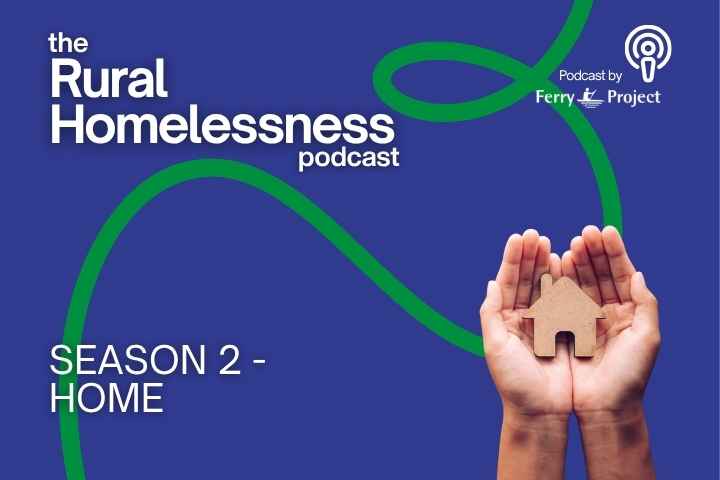
In this episode of the Rural Homelessness Podcast, host Matt McChlery speaks with Catrina Davies about how safety and belonging shape the meaning of home. Davies draws on her experience living in unconventional housing in Cornwall to examine seasonal rentals, second homes, insecure housing, and the practical barriers of having no recognised address.
Listen to the Rural Homelessness Podcast - Full Episode
What Does Home Really Mean?
Most people picture home as four walls and a roof. Catrina agrees, with one addition: "a door that you can close, somewhere you can feel safe."
She argues that this feeling of safety is what we miss when we talk about housing. A six-month insecure tenancy may not give you what you need to thrive. In her words, you need to feel you can put your roots down and "you're not going to be turfed out for any reason."
Place matters too. She describes feeling at home in a very small part of the far end of Cornwall, and says creating a home is a process of putting yourself into a place.
How Rural Housing Pressure Squeezes People Out
Katrina grew up in West Cornwall. Her parents split up when she was a teenager, and she says both were insecurely housed, so she had no house to come back to. She lived in a van for a while, then rented a room in Bristol while freelancing. She says all her energy went into making ends meet. She later moved into an old tin shack her dad had once used as an office, which had not been used for about 20 years. It felt like a relief.
She points to several pressures in Cornwall:
- Tourism and second homes make housing hard to find.
- Many rentals are winter lets that end around Easter, leaving people unsure where to go for the summer.
- Options that once existed, such as living in a caravan on a campsite or parking a van, have largely disappeared.
- She says people feel "squeezed into smaller and smaller spaces" and pushed toward mainstream lives even when they do not want them.
Homeowners Who Leave Their Own Homes
Katrina also describes people who own homes but move out during school holidays into a tent, caravan or garden. They rent the house out to earn money that carries them through a winter with little work. She notes this was before the rise of remote working after COVID. Her broader point is that it is far easier to make money from property than from work.
What It Means to Have No Official Address
Katrina says "so many things flow from having an address." Without one, she explains, you cannot vote or easily access basic services such as doctors and bank accounts. She has been lucky: her sister and a neighbour let her use their addresses.
She gives everyday examples of being "not on the system":
- Her water company could not find her property, even though she had paid water bills for decades.
- Her car insurer cancelled her policy while she was driving because her address was not valid.
- Insurance for the shed was very difficult to get, which was one reason she and her sister sold it.
She says there is little nuance in the system, which seems built for people who stay in one place for decades. "People are finding more creative ways to live because they have to," she says, and that can be very anxiety-inducing.
Today she lives in another shed that does not yet have legal status, and getting it regularised involves things like digging a borehole and getting planning permission. She stresses that she is happy, with shelter and autonomy, but lacks a legal safety net.
Changes and Support the Conversation Points To
Katrina is clear that this is complicated and needs to happen at policy level. She also says she is not blaming people for doing what they must within the system. Her ideas include:
- Changing how government gets money from land. She argues that property value rises partly because of publicly funded services, yet owners do not pay a fair proportion back.
- More social housing, not "ghettoised." She calls for environmentally friendly developments paid for by government and rented to people who need them, rather than quickly built private developments.
- Using empty homes. Matt notes there are two kinds: nice holiday lets, and boarded-up properties that could be brought back to life. Katrina suggests empty houses could be bought and rented to local people at affordable prices.
- Help for owners who cannot afford repairs. She says new laws require rental properties to meet a standard, but some people cannot afford the work. She floats the idea that government could step in, do the property up, rent it out and keep the money, while admitting she does not know the solution.
- She also observes that there are incentives for private developers to build, but fewer for people to renovate existing houses.
Why Sharing These Stories Matters
Matt, who works in the homelessness sector, said the book still opened his eyes to new things. He says it shows why sharing experience is valuable. The Ferryy Project, which makes the podcast, is based in Wisbech, a flat farmland area where second homes are not a major issue. That shows how different rural housing problems can be from place to place.
Katrina's story is a reminder that housing insecurity can be hidden. Someone can have shelter and still lack the legal and practical footing the rest of us take for granted.
To hear the full conversation, listen to the episode.
To read more, find Catrina Davies's book 'Homesick: Why I Live in a Shed'.


£20
£50
£100
£50 allows us to support someone who is street homeless by giving them a room for a night, support and advice, a shower, wash their clothes and have a meal.